


When you enter the Munich Fire Department’s dispatch room on a Tuesday afternoon, you’ll hear something that most hospitals would be jealous of: a steady, low hum rather than the incessant ringing of phones. In between calls, the dispatchers—who are primarily veterans—drink coffee. An AI operator built on Microsoft Foundry is handling non-urgent transports, routine pickup inquiries, and slow-moving paperwork queries in real time. It’s a dull, almost uninteresting setup. And perhaps that’s the point.
One of the firefighters who contributed to the system’s design, Florian Dax, said something that initially resonated with me. He made no mention of disruption or change. He discussed contributing to the tool’s development. Listening to individuals like him gives the impression that the medical professionals and emergency personnel developing this generation of healthcare AI are sick of being told what software will do for them. They want it to be kept on a short leash and they want to construct it themselves, working with engineers.
| Profile: Microsoft AI in Healthcare | Details |
|---|---|
| Organization | Microsoft Corporation |
| Sector Focus | Healthcare AI, clinical workflow, patient care |
| Headquarters | Redmond, Washington, United States |
| Reporting Date | April 13, 2026 |
| Author of Source Report | Sally Beatty |
| Featured Deployments | Munich Fire Department, LMU Klinikum, Kenyan pharmacy networks, Japanese hospitals |
| Core Technology Stack | Microsoft Foundry, Azure Speech (HD Voice), Azure AI Search |
| Stated Design Principle | Clinicians remain at the centre of decision-making |
| Independent Reference | National Institutes of Health study on AI in health care |
| Competing Platforms (2026) | OpenAI’s ChatGPT Health, Anthropic’s Claude for Healthcare and Life Sciences |
Microsoft’s recent reporting on seven different deployments worldwide reflects this tension: utility without going too far. AI is making it easier for pharmacies in Kenya to stock medications more consistently. This may seem unremarkable, but keep in mind that stockouts in low-resource environments can silently kill people. A hospital in Japan that was experiencing a ransomware attack used artificial intelligence (AI) tools to keep vital data flowing while the rest of its systems were locked. The biggest hospital in Munich, LMU Klinikum, is currently hosting the fire department’s beta. Doctors are not being replaced by machines in any of these tales. They are about quieter, smaller victories.
The differences between this and the AI discussions from just two years ago are difficult to ignore. Robotic surgeons, cancer-spotting algorithms, and diagnostic advancements were all in the news back then. A portion of that has come to pass. At least not on a large scale. The tedious tasks—documentation, triage, intake, and restocking—seem to be working instead. The type of work that everyone needs done but no one wants to do.
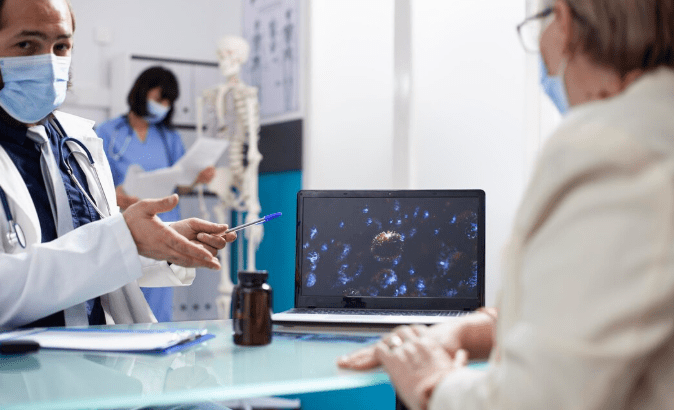
There are still many things to be dubious about. As the NIH chapter on AI in healthcare pointed out years ago, there is still little evaluation of these tools in peer-reviewed literature, and this hasn’t changed enough. In his recent review of ChatGPT Health, Professor Shafi Ahmed noted that privacy workflows still heavily rely on human judgment: the tool is only as safe as the user. That is a serious warning. It’s the entire game.
The timing is striking. In January 2026, Anthropic introduced Claude for Healthcare and Life Sciences, while OpenAI launched ChatGPT Health. Microsoft introduced Copilot Health in March. In a matter of weeks, three businesses and three ideologies came together to focus on medicine. It feels less like a coincidence and more like the breaking of a long-building wave.
It’s still too early to tell if all of this represents a genuine change or just another hype cycle. Munich dispatchers, however, appear more composed. Nairobi’s pharmacists appear to have better supplies. Additionally, a backup system is operating silently somewhere in a Japanese hospital. Sometimes that’s what progress looks like: it’s functional rather than ostentatious or loud.
