
Around 2:00 p.m., when the lunch rush has passed and only a few stragglers are left, scrolling and eating alone, seemingly preferring to be somewhere else, a certain kind of silence descends upon a high school cafeteria. You’ll begin to understand why a former linebacker, whose name is primarily associated with hits that shook NFL stadiums, has decided that his second act will be about something much more subdued if you walk into one of these rooms in Baltimore, Boston, or anywhere in between. mentoring. paying attention. arriving.
On April 30, 2026, Ray Lewis’ Ray of Hope Foundation and MENTOR, a Boston-based nonprofit that has been quietly piecing together America’s mentoring infrastructure for more than thirty years, announced a new collaboration. As expected, the press release is polished. However, the underlying message seems more weighty than the wording implies. The nation’s youth are more alone than they have been in a generation, and the responsible adults are at a loss for solutions.
| Bio Data / Key Information | Details |
|---|---|
| Full Name | Ray Lewis |
| Date of Birth | May 15, 1975 |
| Birthplace | Bartow, Florida, USA |
| Profession | Former NFL Linebacker, Philanthropist, Speaker |
| NFL Career | Baltimore Ravens (1996–2012), 13× Pro Bowl, 2× Super Bowl Champion |
| Hall of Fame | Pro Football Hall of Fame, Class of 2018 |
| Foundation | Ray of Hope Foundation (Mental Health Advocacy) |
| New Partner | MENTOR |
| Partnership Announced | April 30, 2026 |
| Headquarters of MENTOR | Boston, Massachusetts |
| MENTOR CEO | Jermaine Myrie |
| Focus Area | Youth mentoring, mental health, resilience |
| Notable Quote | “Every young person deserves someone who believes in them.” |
Reinvention is nothing new to Lewis, of course. Following the conclusion of his playing career in 2012, he alternated between motivational speaking, television commentary, and an increasing number of business endeavors. A portion of it touched down. Not all of it did. However, the overarching theme remained constant: an almost evangelical faith in self-improvement. The Ray of Hope Foundation seems to be the most cohesive manifestation of that philosophy to date, with its emphasis on mental health access and emotional well-being. It seems as though he has been thinking about this project for years.
There’s more to the MENTOR partnership than just the name on the marquee. It’s the ancestry. Bill Russell, the legendary Celtics player and civil rights activist who may have understood better than most that no one succeeds on their own, helped launch MENTOR more than thirty years ago. To be honest, it’s a little difficult to ignore Lewis as he takes on that legacy. Two athletes from two different eras who both maintain that the real work is done in the unglamorous middle of someone’s worst week, off the court and off the field.
Nor are the numbers supporting the endeavor subtle. Since the pandemic, the prevalence of loneliness, anxiety, and depression among American teenagers has increased dramatically. The data on mentorship, which shows that 58% of mentored youth report that their mentor has supported their mental health, suggests what most parents already suspect. Children don’t require additional apps. They require a phone-answering adult. To be honest, it’s still unclear if a national partnership can scale that intimacy.
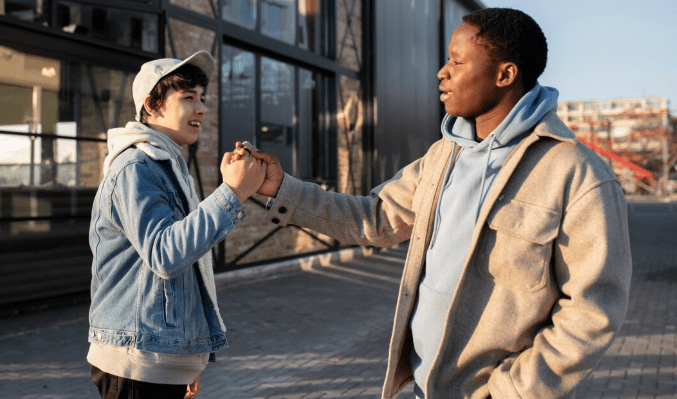
MENTOR’s CEO, Jermaine Myrie, stated in the announcement that the organization’s objective is to guarantee that no young person achieves success on their own. It’s a neat line, but when you take into account how many programs have attempted similar pitches and quietly faded, it becomes more significant. Instead of treating mental health support and mentoring relationships as distinct issues, the partnership intends to increase public awareness, find more volunteer mentors, and link the two. The integration, which is the final component, is where this collaboration may truly innovate.
Lewis sounds less like a former athlete and more like a man who has lived long enough to understand the costs of isolation in his recorded video message titled “They’ll Never Be Alone.” It will take years to determine whether that results in quantifiable improvements for children in fifteen Baltimore County schools or fifteen hundred classrooms nationwide. However, someone is making an effort. loudly. And perhaps that is sufficient for the time being.
