


After a long day, sitting next to a dog creates a certain kind of silence. Not the quiet of a friend scrolling through their phone while you’re trying to finish a sentence, or the silence of someone waiting to talk about themselves. It’s simply being there. Warm, simple, and oddly whole. Furthermore, nearly half of Americans now believe that their relationship with their pet is more important to their general well-being than their closest human friendships, according to recent survey data. To be honest, that number merits another examination.
The results coincide with an increasing amount of research indicating that the relationship between humans and animals is more than just a sentimental side effect. According to a Pew Research Center study, dog owners are the most likely to view their pets as members of the family. According to surveys linked to Mars Global, 84% of pet owners claim that their animal helps them unwind, and over half find solace in their pet during truly trying times. Compared to friends or family, 78% of respondents said their pets offer greater emotional support. Those who dress their Chihuahuas in raincoats don’t hold these extreme views. These are widely held beliefs that cut across all demographics.
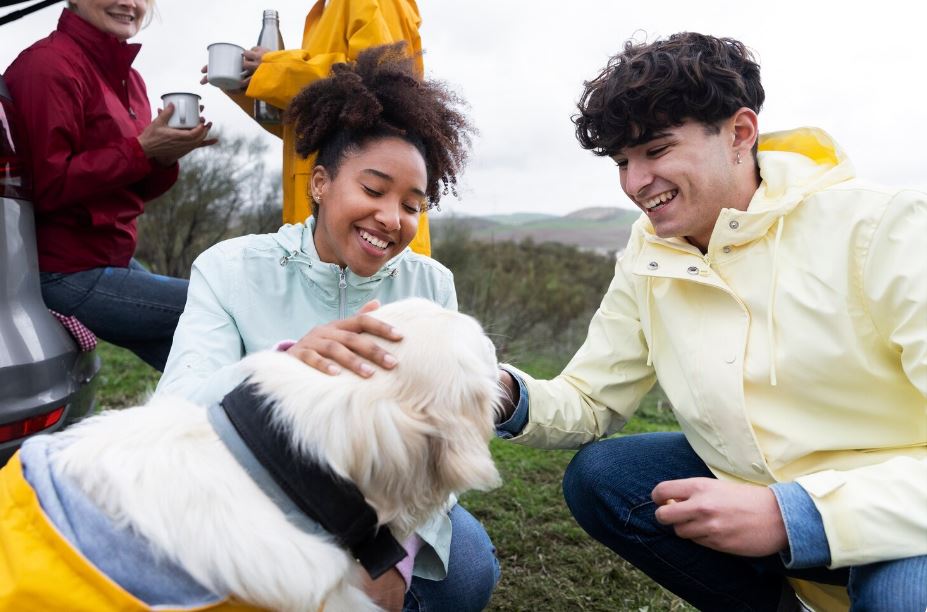
This is intriguing—and perhaps a little unsettling—because it captures the general state of human connection. Remote work, dwindling social circles, fractured communities, and the gradual decline of what sociologists sometimes refer to as “third places”—the coffee shops, churches, and barbershops where people used to simply run into each other—have all contributed to the long-term rise in loneliness in the United States. It’s possible that pets have filled a void left by human relationships rather than winning an emotional competition.
The type of bond is crucial, according to a 2024 study that was published in the journal Animals and involved over 1,300 dog and cat owners. Owners who felt that their pets contributed something significant to their identities—a phenomenon known as “self-expansion”—reported feeling happier and less lonely. Anxiety and depression were more prevalent in those who thought their pet was insensitive or unresponsive. In other words, the relationship isn’t always therapeutic. Even the researchers were taken aback by how closely it resembles the dynamics of human attachment.
This has been expanded upon by Harvard’s Canine Brains Project, which investigates the possibility that dogs have literally evolved to take advantage of human psychology. Dogs are “psychological parasites” that have evolved to hack our emotions and occupy the space we would typically reserve for human partners, according to Erin Hecht, the project’s director, who has described the concept with a kind of loving bluntness. Dogs seem to have figured out how to become indispensable over tens of thousands of years, rather than just becoming our friends.
Perhaps they did. Owners rated their relationship with their dog as satisfying or more satisfying than their closest human bond, according to a study of 717 participants reported by the Guardian. Not merely consoling. Not merely adorable. Greater satisfaction. For those who think that human friendship is the foundation of emotional life, this discovery is unsettling.
Everywhere you look on a Saturday morning in any American park, you can see the proof. People stop to let a stranger’s Labrador sniff their palm, adjust leash tension with the care of someone holding a toddler’s hand, and speak to their dogs in complete sentences. When those same individuals pass each other silently on the sidewalk or glance at their phones, there is a tenderness in those exchanges that is frequently lacking.
All of this does not imply that human friendships are generally failing. However, it’s difficult to ignore the fact that the standard for emotional openness has changed. Plans are not canceled by pets. They’re not in competition. They don’t pass judgment. Sitting on a couch with a dog leaning against your knee, breathing slowly, and asking for nothing at all is a good way to consider whether this makes them easier or better companions.
