


The gym itself has never truly been the issue with gyms. It’s everything that surrounds it, including the price, the commute, and the slight social anxiety that comes with entering a room full of people who appear to know what they’re doing. Those surrounding elements tend to weigh a lot in a country like Dorset, where the villages are dispersed widely and a single Tesco can be twelve miles away. Because of this, what Dorset has developed over the last few years—quietly and without much national attention—is truly worth examining.
Instead of facilities, the strategy is based on free, community-based platforms. Supported by the local government and the NHS, LiveWell Dorset provides residents with free one-on-one health coaching. Avoid using a chatbot. Not a booklet. A genuine coaching relationship, accessible online or over the phone, that can direct individuals to nearby walking groups, swimming sessions, or seated exercise programs based on their needs and practical availability. It seems small until you realize how infrequently that combination—practical, free, and personal—occurs in one location.
The Active Dorset Activity Finder performs a similar but distinct function. Wheelchair-accessible sports, seated yoga, and gentle walking organizations like the Dorchester Strollers are just a few of the welcome local events it tracks. Because it speaks directly to the obstacle that isn’t given enough attention, the word “welcoming” is doing a lot of work there. Many people who don’t exercise don’t avoid it because they don’t like being active. They’re staying away from it because they’ve experienced settings that seemed subtly exclusive, where their size, age, mobility, or degree of fitness made them feel like outsiders rather than contributors.
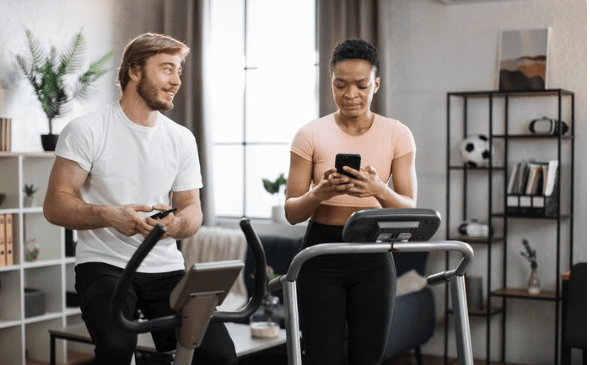
Move Together, which uses the Good Boost platform, has a slightly different strategy that is important to comprehend on its own terms. By customizing workouts to each person’s mobility level, it transforms residential environs into effective training venues. This is beneficial for anyone managing chronic diseases or recovering, but what makes it unique is the social architecture.
The physical content is complemented by virtual coffee gatherings. The reasoning for this is that social connection and exercise adherence are closely related, and if you can offer both simultaneously without having anyone to leave their home, you eliminate the majority of the practical obstacles that usually lead individuals to quit after week three.
The cacophony of the wellness app industry is a different but related issue that is addressed by the Dorset App Library, which is approved by ORCHA and curated under NHS supervision. The majority of consumers searching for fitness or wellness apps lack a trustworthy method to distinguish between those that are marketed as health content and those that are clinically sound. That filter is provided by ORCHA’s review procedure. The outcome is a carefully chosen collection of resources, such as NHS Active 10, that residents can rely on without having to sort through the options on their own.
It’s difficult to ignore the fact that the entire Dorset ecology is built on the understanding that exercise behavior is contextual and social rather than merely individual. The national discourse on physical inactivity frequently frames the issue as one of willpower or motivation, implying that better personal decisions are the answer. Dorset’s method approaches it as a design challenge, which is a more honest approach. Motivation by itself won’t make a difference if the facilities are unavailable, the expenses are too high, the culture is hostile, and the isolation is genuine. When the surroundings are altered, the behavior usually follows.
It’s unclear if the model scales well outside of a rural English county. Dorset is a unique test case due to its terrain, which includes dispersed towns, little public transportation, and a sizable elderly population. However, its guiding principles—free access over membership restrictions, community connection over solitary fitness tracking, and social prescribing over gym culture—are not regionally specific. There’s a feeling that other regions of the UK, and perhaps even beyond, are keeping a closer eye on Dorset’s figures than the scant media coverage would imply.
