


Everyone used the term “wellbeing” for years, but no one could define it. It was used by doctors. It was used by yoga instructors. HR departments used it as the basis for entire programs. Soft and unverifiable, the word floated through government white papers, Instagram captions, and TED talks, meaning roughly whatever the speaker needed it to mean. Given how much money and policy was being shaped by a term that no one had agreed upon, it’s difficult to ignore how odd that was.
Perhaps that uncertainty is coming to an end. In a study conducted by Dr. Matthew Iasiello of Adelaide University and published in Nature Mental Health last month, 122 experts from 11 different fields were surveyed, leading to the first global agreement on the definition of positive mental health. 19 dimensions, arranged with care. Iasiello likens the situation to the standardization of blood pressure, which may sound dry until you consider that cardiologists were basically speculating prior to standardized cuffs. According to him, wellbeing research has been doing the same thing for many years.
| Information | Detail |
|---|---|
| Study Title | International Consensus on the Definition of Positive Mental Wellbeing |
| Published In | Nature Mental Health, April 2026 |
| Lead Researcher | Dr. Matthew Iasiello |
| Lead Institutions | Adelaide University & Be Well Co |
| Experts Consulted | 122 global experts |
| Disciplines Represented | 11, ranging from economics to theology |
| Dimensions Identified | 19 core dimensions of positive mental health |
| Related Framework | Emotional Well-Being (EWB), per Park et al., 2022 |
| Industry Context | 2026 Global Wellness Summit, January 2026 |
| Key Distinction | Drivers of wellbeing (income, housing) vs. definition of it |
Almost as fascinating as what the consensus includes is what it excludes. The factors that government dashboards and wellness apps love to monitor—income, housing, and physical health—were categorized as drivers rather than definitions. Even if you own the house, you might not be well. Reading the paper gives me the impression that researchers were subtly correcting a generation of policymakers who mistook the foundation of a good life for the life itself.
It’s a striking moment. The wellness industry made what amounted to a public confession just three months prior at the Global Wellness Summit in January. Reporting from the event, Heather Hurlock noted an unusual atmosphere in the room: more recognition that the previous ten years had gone wrong than optimization. “Never before has wellbeing been so measurable—and never before has it felt so psychologically demanding” is a quote from the report that has been used everywhere ever since. That succinct and somewhat dejected statement helps to explain why so many people who are doing everything “right” still feel empty inside.
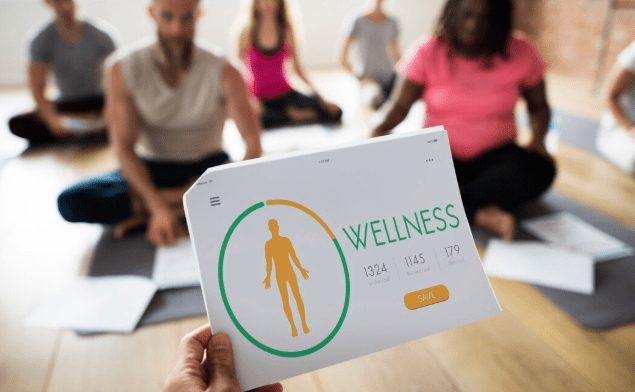
It seems less coincidental than it probably is to see these two announcements occur within weeks of one another. The promise of wellness as a marketplace was that a person could be engineered into thriving with the right protocol, wearable, and supplement stack. Now, the science points to something more difficult and unfamiliar. Meaning, connection, and the ability to function psychologically in the face of adversity are all components of wellbeing. None of those would look good on a dashboard. They all don’t make money on a quarterly basis.
A less obvious implication of the study is that a person can maintain a high level of mental wellbeing while managing clinical depression. It is important to keep that distance. It challenges the traditional clinical tendency to treat mental health as a binary—sick or well—and provides room for those who are, in the messy way that most lives are, somewhere in the middle. For an industry that has long promoted the absence of struggle as the objective, it also poses difficult questions.
It remains to be seen if employers and governments will truly employ this new taxonomy. In practice, frameworks are often disregarded while being praised in journals. The definitions do exist, though, for once. The dispute is documented as settled. The next, much longer story is built upon that foundation.
