


Every weekday morning at a bus stop in practically every working-class neighborhood, there’s a little, easily missed moment. A woman in scrubs leaves, walks four blocks to a hospital where her pay is lower than that of the surgeons working there, and, somewhere along the way, engages in about twenty minutes of moderate exercise without ever referring to it as exercise. When you multiply her by a few million passengers, you begin to understand why transit economists continue to maintain that a city’s buses, trains, and trams may be among its most inexpensive public health infrastructure.
At first, it’s an odd argument. Hospitals, vaccines, and possibly a sugar tax are typically associated with public health. However, the evidence has been quietly accumulating. For example, Todd Litman’s long-standing work at the Victoria Transport Policy Institute contends that one of the most economical population health interventions a city can make is to improve transit. It’s not because the bus itself heals people, but rather because riding one forces you to walk to, wait at, and then leave the bus. Decades’ worth of tiny, nearly undetectable motion bursts.
| Topic Profile | Details |
|---|---|
| Subject | Public transit as a public health investment |
| Primary research base | Victoria Transport Policy Institute, Litman (2020) |
| Key finding | Transit users walk roughly 3x more daily than car commuters |
| Reference study | Alhassan & Anciaes, Journal of Transport & Health, 2025 |
| Cities frequently cited | Shenzhen, Santiago, Mexico City, Bogotá |
| Global urban population share | Over 50%, projected near 70% by 2060 |
| Cities’ share of greenhouse emissions | More than 70% globally |
| Cost-benefit framing | Per dollar spent, transit returns measurable gains in physical activity, air quality, and access |
| Policy relevance | Climate, equity, employment, public health convergence |
Researchers believe that the medical community has been slow to take this into consideration. According to a 2016 study published in the NIH archives, people who use public transportation are typically much more physically active than drivers, frequently meeting recommended daily activity levels without even trying. Pharmaceutical companies would pay billions to replicate that kind of behavioral nudge. It can be installed by cities using a schedule and a paint stripe.
There are more layers to the economic argument. Public transportation investments increase household incomes, boost local GDP, and draw workers from informal to formal employment, according to a recent review by Alhassan and Anciaes that was published earlier this year. The most frequently mentioned example is Mexico City’s Line B, which connected the central districts, where formal work was waiting, to the northeast, where informal jobs predominated. The line did more than just make commutes shorter. For thousands of families, it changed the rules of household economics. As is well known, higher incomes are typically associated with better health.
Nevertheless, it’s worth exercising some caution. Additionally, transit has the potential to drive out the very people it was meant to serve by increasing property values. Researchers refer to it as “transit-induced gentrification,” and there is conflicting evidence regarding cities’ ability to stop it. The recent wave of disinvestment has also had a more subtle cost: bus services were removed from rural Canada, branch lines were shut down throughout the United Kingdom, and routes were reduced in mid-sized American cities. Those who are left behind are typically poorer, older, and more vulnerable to illness. It’s not an abstraction. It manifests as skipping cancer screenings and dialysis appointments.
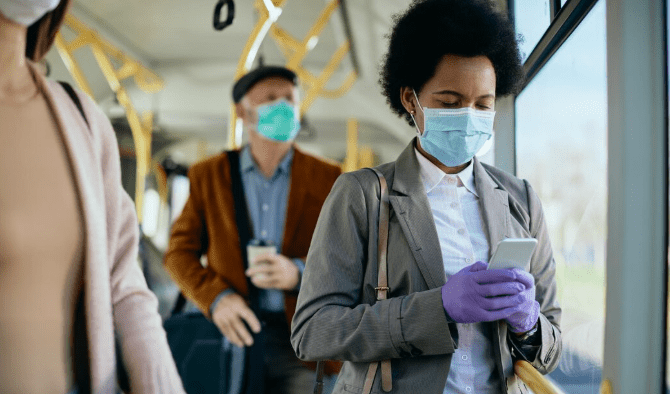
The cost-effectiveness argument is so enduring because it addresses so many objectives at once. improved air quality. Reduced emissions—keep in mind that cities are responsible for over 70% of the world’s greenhouse gas emissions. Reduced social isolation, particularly for senior citizens who become incapable of driving long before they lose interest in leaving the house. more robust labor markets. fewer fatalities from traffic. On its own, each would warrant spending. When combined, they give the impression that a single line item is almost suspiciously generous.
It’s difficult to ignore the fact that cities that treat transit as a health investment rather than just a transportation one tend to outperform on nearly every important metric, as evidenced by the electrification of entire bus fleets in Shenzhen and the decades-long improvement of Bogotá’s BRT. It remains to be seen if more mayors will view it that way prior to the next budget cycle.
