
An optician’s reminder card has an almost intolerably ordinary quality. Alongside dentist appointments and MOT deadlines, it is a small administrative nudge that shows up in the mail or pings on a phone. For a few weeks, if not longer, most people choose to ignore it. Occupational therapist Rhiannon Ashbourne, 29, of Staffordshire, who works close to Burton-on-Trent, did not disregard hers. She is aware of what is developing inside her skull because of that tiny act of compliance, making the appointment and showing up.
Rhiannon was sitting in an optician’s chair earlier this year, anticipating nothing more dramatic than an updated prescription. For some time, she had been suffering from pulsatile tinnitus, which is a peculiar, rhythmic whooshing sound that some people describe as hearing their own heartbeat in one ear. At work, she had observed a decline in focus and the emergence of weariness on days that ought to have felt doable. It didn’t seem concerning at all. There were no crushing headaches, seizures, or any of the textbook symptoms that most people associate with a major brain malfunction. However, Rhiannon was unable to feel what her optician saw: papilledema in both eyes, a swelling around the optic nerve brought on by pressure building where it shouldn’t. Within days, an urgent referral was sent out.
What came next was a medical sequence that flattens time by accelerating. The papilledema was verified by an ophthalmologist. A mass was found on an MRI. A low-grade glioma was initially suspected, which would have been terrifying enough. However, a biopsy revealed the worst possible explanation: glioblastoma multiforme, or grade four astrocytoma. aggressive, uncurable with current treatments, and inoperable due to its location. It is difficult to ignore the short time span—just a few weeks and a series of referrals that went exactly as planned—between that optician’s reminder card and this diagnosis.
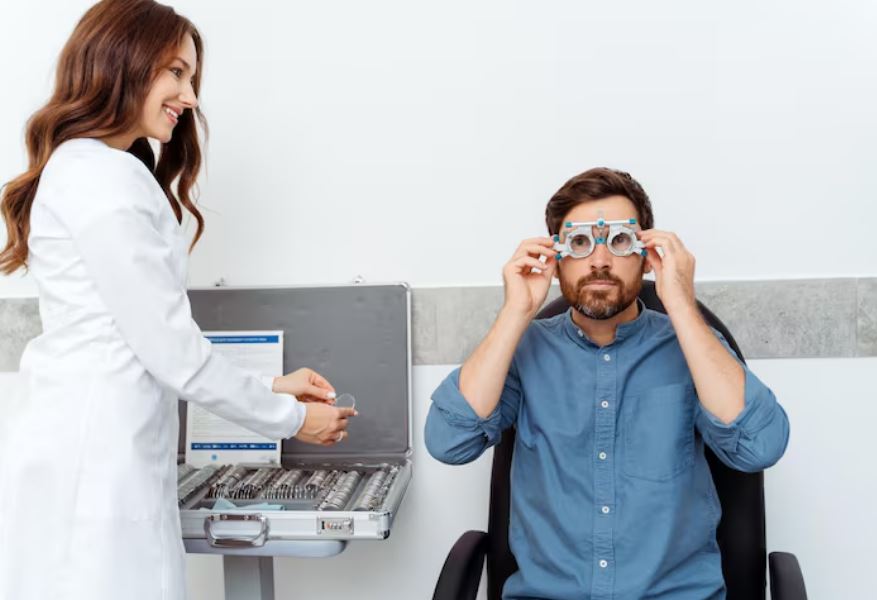
During National Eye Health Week in September 2025, Rhiannon’s story was made public by The Brain Tumour Charity. It has significance in part because she is not the only person whose life changed due to an eye appointment. After a routine test revealed abnormalities in both eyes, Katie Dunn was diagnosed with a meningioma. She has bluntly stated that the examination may have saved her life as well as her vision. Her optic nerve had been under pressure from the tumor. The damage might have been irreversible if it had continued to grow unchecked. These aren’t strange coincidences. Thirty-nine percent of children with brain tumors experience changes in their vision, and approximately one in three patients report vision issues related to their diagnosis or treatment. It turns out that the eyes are more than just windows into the soul. They are diagnostic tools that show nerve damage and pressure changes that might otherwise go undetected until symptoms worsen.
The discrepancy between Rhiannon’s perception and reality is what makes her story so remarkable. She was living a full life, traveling, and working at a demanding job in mental health services. In any case, the tumor was expanding. That disconnect, the notion that a body can harbor something so dangerous while sending virtually no clear signals, is profoundly unsettling. How much do we rely on symptoms to tell us when something is wrong, and how frequently does that reliance fail? This is a question that most people would prefer not to think about.
In an effort to slow the disease and buy time, Rhiannon is currently getting ready to start chemoradiation therapy. She is unable to operate a vehicle. She is unable to work. She describes her dependence on others as both humbling and revealing of the generosity around her, as the independence she once took for granted has drastically diminished. She has been especially outspoken about OCT, or optical coherence tomography, a test that creates detailed retinal images and can identify conditions long before they manifest symptoms. Usually, there is a small extra charge. Rhiannon’s stance is straightforward: the cost is negligible in comparison to the potential benefits of early detection.
Beyond awareness campaigns and charitable messaging, these stories contain something worthwhile. It is the unsettling reality that sometimes medical resilience depends more on whether someone opens a reminder, answers the phone, and keeps an appointment that seems completely routine than it does on drastic interventions. For Rhiannon, the system was effective. How many people it doesn’t work for just because they never entered the building is the question that looms over everything.
