
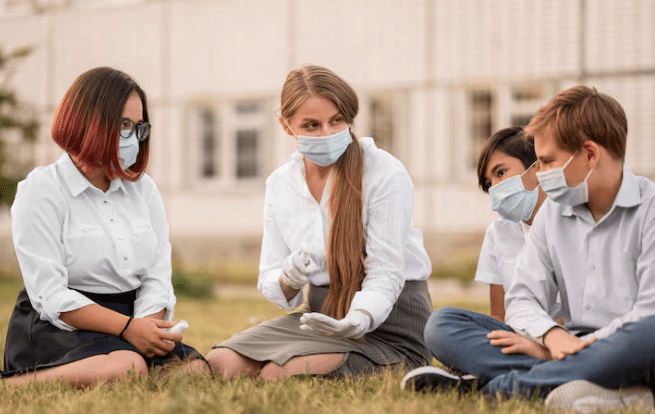
Students paused to create floral arrangements on the lawn outside Harvard Law School on a Monday afternoon in early April. Not in a classroom. Not for a task. just because someone believed it could be beneficial. The third annual Student Wellbeing Week at Harvard began with a small, almost domestic scene: students arranging flowers in between lectures and deadlines. There was something subtly significant about it. It didn’t have the feel of a university course. It was like a breath out.
This year’s Harvard Student Wellbeing Week, which was organized by the student-led Student Wellbeing Council, took place from April 6 to 10. It featured panel discussions on imposter syndrome, yoga sessions in the Yard, mocktail bars, and small community events that were more about simply being around people than networking. events that, ten years ago, would have seemed superfluous or soft at a university like Harvard. They feel overdue now.
Something uncomfortable gave rise to the week. According to research published in 2020 by a university task force, depression, anxiety, and loneliness were becoming more common among Harvard students. It’s not a small footnote. In formal terms, that is an institution admitting that it had been placing students in one of the world’s most demanding environments without sufficiently inquiring about their well-being.
In simpler terms, Hanah Youn, a 2028 student and co-chair of the Student Wellbeing Council, put it. According to her, students frequently feel like they’re the only ones having difficulties and don’t know who to turn to or where to go. Sitting in a library with people who seem to be getting along just fine and not realizing that the person two tables away is thinking exactly the same thing can be particularly isolating. In a sense, Wellbeing Week is an effort to bring that shared, invisible experience to light.
The expert panel on the Longwood Campus on Tuesday was especially anticipated. It was the kind of discussion that is rarely held in Harvard classrooms and focused on the neurocognitive and psychological burden of academic life, including imposter syndrome, mental strain, and the unique pressure of high-achievement environments. Co-chair of the council and master’s student at Harvard Medical School, Kandace Chi Wing Chan, was publicly thrilled about it. She wanted students to feel free to ask questions about difficulties they encounter but seldom talk about out loud. The amount that has changed can be inferred from that framing alone.
Notably, none of this came about on its own. While the students handle the organizing and outreach, Robin Glover, associate provost for student affairs, oversees the larger university endeavor and advises the student council. Genuine student momentum and institutional support seem to be coming together here, which is a more useful combination than it may seem. Programs at universities that lack student support often reverberate in empty rooms. By most accounts, these ones are not.
The window is purposefully selected after spring break. Finals are approaching. For some, graduation is coming up. At any competitive university, April’s emotional climate is a unique combination of fatigue, excitement, and an indescribable low-grade dread. It feels less like a coincidence and more like someone correctly read the room when Wellbeing Week is launched at that precise moment.
The fact that students are creating the programming itself may be more telling than the programming itself. Anxiety is being discussed candidly and mocktail bars are being organized by a generation that once inherited a culture of silent endurance. Perhaps the most significant aspect of Harvard Student Wellbeing Week is not the schedule, but rather the people who are finally willing to attend.
