


Reading about a study in which the participants did not leave is unsettling. We are accustomed to wartime research focusing on the children pressed up against train windows, the people who ran, and the columns of suitcases on highways. The opposite is done in this recent paper published under the Nature umbrella in Scientific Reports. It enters Kyiv’s suburbs and takes a seat with the guests.
Nineteen residents of towns that came to represent the early horrors of 2022 were interviewed by Natalia Bekassow and her co-authors. Everyone who follows the news knows which suburbs are meant, even though the names are rarely mentioned in the abstract. The researchers combined lengthy, candid discussions with the PCL-5, a common PTSD screening instrument. After that, they selected two cases with the highest and lowest symptom scores and examined the differences between them. The authors acknowledge that this is a small sample. However, what counts is the work’s texture.
| Study Information | Details |
|---|---|
| Study Title | Trauma and resilience among non-displaced in the early phase of the war in Ukraine |
| Lead Author | Natalia Bekassow |
| Co-Authors | Stephan Herpertz, Jan Dieris-Hirche, Kostiantyn Polishchuk, Ina Carola Otte |
| Journal | Scientific Reports (Nature Portfolio) |
| Volume / Article No. | Volume 16, Article 13883 |
| Year of Publication | 2026 |
| Research Region | Suburbs of Kyiv, Ukraine |
| Sample Size | 19 in-depth qualitative interviews |
| Primary Instrument | PCL-5 (PTSD Checklist for DSM-5) |
| Theoretical Framework | Michael Ungar’s multisystemic social-ecological resilience model |
| Methodology | Mixed-methods (quantitative + qualitative content analysis) |
| Focus Population | Non-displaced civilians who remained in war-affected zones |
| Funding & Access | Open access publication, peer-reviewed |
The framing is what makes it stand out. In this essay, resilience is not a quality that you possess or do not possess. It occurs between individuals, structures, and meanings. Michael Ungar’s social-ecological model, which distributes resilience across micro, meso, macro, and even transnational layers, is relied upon by the authors. Warsaw family WhatsApp groups are counted. Volunteer networks, neighbors sharing a generator, and the peculiar comfort of a tea ritual that continues under sirens are all examples of this. The majority of trauma research still focuses on the individual brain, despite the fact that this way of thinking seems almost obvious once expressed.
A different line of inquiry that examines Ukrainian soldiers in the trenches is also noteworthy. Conventional Combat and Operational Stress Control models, which are primarily based on American and NATO experiences, don’t quite translate to a conflict fought over three thousand kilometers of contested territory, according to Iryna Frankova and colleagues. Long deployments, drones in the air, and an unclear rear area. Although the soldiers and civilians are fighting different wars, the fundamental question remains the same. When the threat persists, how do humans continue to function?
These days, it’s difficult to ignore how frequently the word “routine” appears in this literature. cleaning your teeth. preparing borscht. strolling past the same damaged buildings with the same dog. Such details were once considered background information by researchers. They appear to be in the forefront more and more. Nearly 75% of Ukrainian respondents met PTSD diagnostic criteria, according to other recent studies, including one conducted by Chudzicka-Czupě’s team. The streets of Kiev continue to move despite that startling figure. People leave for work. Cafés continue to operate. While something else is shattering, something is holding.
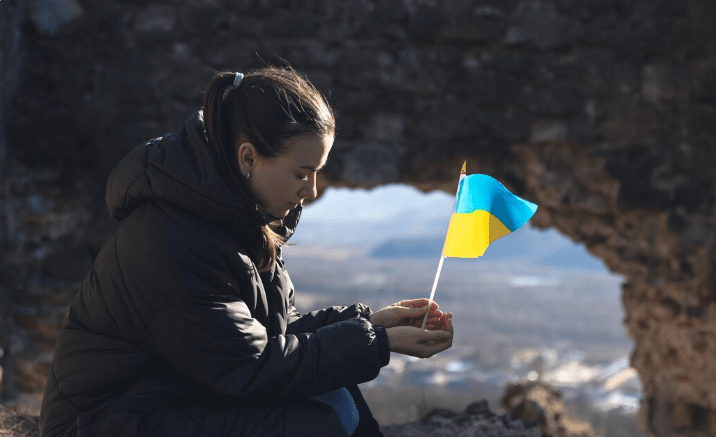
That tension is not addressed in the Bekassow study. It simply provides a detailed description of it. Here, resilience is structural, relational, and occasionally symbolic. A window with a flag. A call from a neighbor. A grandmother who determines she is too old to relocate. Reading the paper gives the impression that the writers are purposefully avoiding the temptation to elevate their participants to hero status. Instead of transcending, these people are coping.
It’s still unclear if the results will apply to other protracted conflicts. The suburbs of Kiev are not Aleppo, Gaza, or Khartoum. However, the methodological change—treating staying as deserving of research rather than just flight—might prove to be the long-lasting contribution. You get the impression that the field is gradually learning to ask more insightful questions about what endurance truly looks like up close as you watch this body of work develop.
