
Standing inside the Dachau crematorium, there is a moment when the place’s weight feels almost tangible. The walls are near. The light is gray and flat. Your own breathing is audible to you. That two-hour bus ride from Patch Barracks in Stuttgart on a recent weekday wasn’t abstract history for the thirty or so American service members who took it. It was the entire purpose of the journey, and it was done on purpose.
As part of the garrison’s Building Strong and Ready Teams program, or BSRT, the excursion was arranged by USAG Stuttgart’s Religious Support Office. Deputy Garrison Chaplain Lt. Col. Michael Kim led the group, organizing the day around a single theme before the bus had even arrived at the autobahn: ethical leadership. That may seem like typical military rhetoric at first glance. However, Kim’s covert work at Stuttgart goes far beyond a PowerPoint on decision-making.
BSRT, formerly known as Strong Bonds, is a chaplain-led, command-directed program that aims to improve soldiers’ and their families’ relational, emotional, and spiritual preparedness. The format is important. These aren’t conference room seminars. These are intentional off-site experiences designed to foster the kind of atmosphere where people genuinely converse. Kim feels that everything is altered by the environment, and it’s difficult to disagree with him after seeing how the visit to Dachau transpired.
Just a year into his assignment in Stuttgart, Pfc. Tre’Ven McFee of the 554th Military Police Brigade stated he had never visited a concentration camp memorial. He talked about how it was clearly difficult to navigate the execution rooms, including the waiting areas, the disrobing rooms, and the chamber that resembled a shower. “I can’t imagine thinking you’re going to take a steamy, hot shower and not living to talk about it,” he replied. His voice was not detached. That’s exactly what Kim wanted. The pictures of women giving birth inside the camp to children they would never see grow up, according to Spc. Myliah Williams, a mother of a four-year-old, stayed with her long after the bus ride back. “It’s not sugar coated,” she muttered.
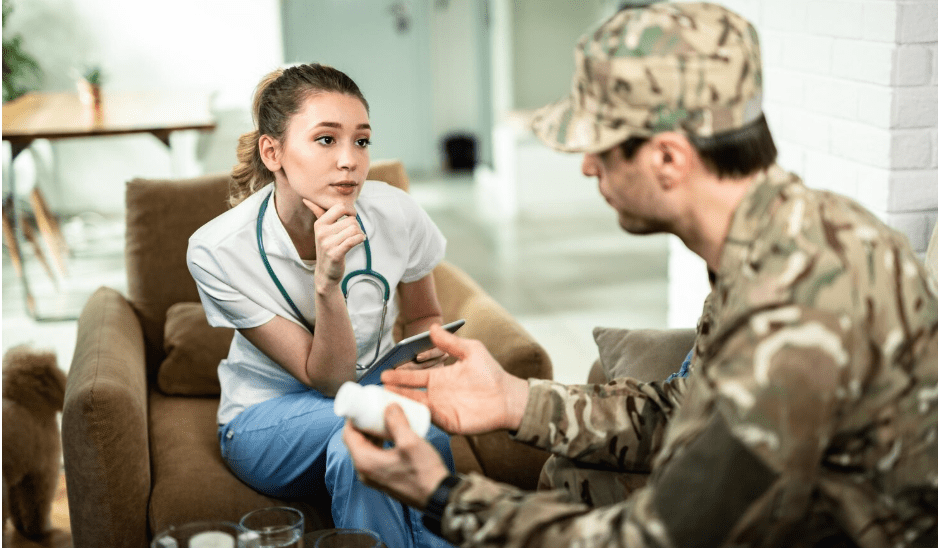
Kim’s method appears to recognize something that clinical frameworks occasionally overlook: that moral weight and meaning-making can reach individuals in ways that traditional mental health programming may not always be able to. This may be the reason why USAG Stuttgart’s mental health specialists are genuinely excited about what’s happening here. Individual therapy, group sessions, drug treatment, embedded counselors in schools, and a walk-in triage model called Vectoring that doesn’t require an appointment are just a few of the many services already provided by the garrison’s Mental Health Clinic. It’s more difficult to identify what BSRT adds. Refer to it as context. or moral foundation.
Speaking with those involved in this program gives me the impression that, in contrast to the typical top-down initiatives, the military mental health discourse in Stuttgart is changing. Kim arranges off-site excursions to historical and cultural locations within two hours of the garrison every three months. Additionally, he has concentrated on ensuring that joint-service members—those without a local chaplain assigned to them—are not merely slipping through the cracks.
It’s still genuinely unclear if this model will work outside of Stuttgart. Over the years, the military has implemented numerous resilience initiatives, some of which have had varying degrees of success and skepticism. However, Kim appears to be constructing something more truthful about the weight that soldiers truly bear and more open to meeting them where that weight resides. That weight becomes indisputable when standing in a location like Dachau. That may be the precise beginning point that these programs have been lacking.
