
Between searching for your symptoms on Google at midnight and eventually scheduling a doctor’s appointment three weeks later, ChatGPT begins to seem like a perfectly good compromise. It is present at all times. It pays attention. It doesn’t pass judgment. It also reacts as though it knows something, which is what makes it truly alluring.
About a year ago, Abi, a young woman from Manchester, came to that realization. Because of her health anxiety, a typical internet search usually takes her to WebMD’s worst-case section in about 45 seconds. It felt different with a chatbot. more conversational. Instead of spiraling into a list of terminal diagnoses, it would be more like discussing a problem with someone. “It allows a kind of problem solving together,” she recently stated to the BBC. “A little bit like chatting with your doctor.”
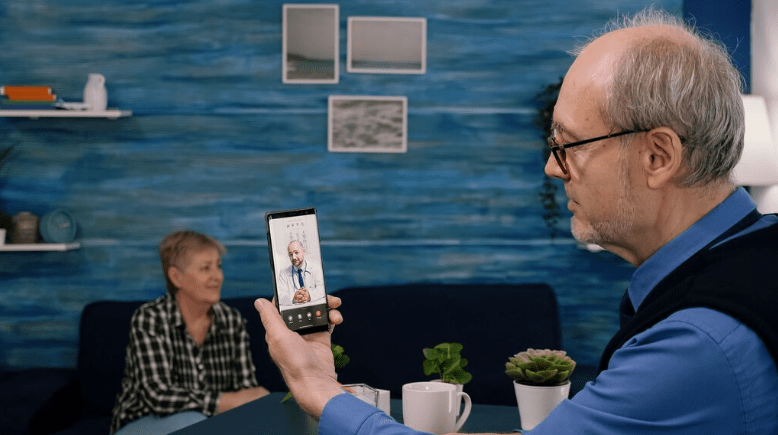
And occasionally it was successful. ChatGPT explained her symptoms and directed her to a pharmacist when she thought she might have a UTI. She received the necessary antibiotic. No waiting, no appointments, and no shame about squandering NHS time on a trivial matter. It seemed like a minor, unnoticed victory for the technology.
January then arrived. After slipping on a hiking trail and hitting her back hard on a rock, Abi felt pressure move from her spine into her stomach. She took her phone out. ChatGPT advised her to go to accident and emergency right away because she might have punctured an organ. She left. She spent three hours sitting in a waiting area. Over time, the pain subsided. She returned home. Nothing had been punctured by her.
The difference between the two experiences—the hiking fall and the UTI—is exactly what makes the AI health advice issue so challenging to resolve. The BBC recently conducted a more thorough investigation into this, testing a number of chatbot platforms, and the results were genuinely disorganized. According to research referenced in the study, chatbots were approximately 95% accurate when provided with comprehensive medical data. The outcomes, according to the researchers, were “nearly perfect.” However, that is the problem in the lab. Unlike medical textbooks, real people do not describe their symptoms. They claim to have stomach pains. They omit certain details. The incorrect detail is mentioned.
This point was further supported by a different study that was released earlier this year. Researchers discovered that the combination of human users and AI performed no better than a control group using conventional methods—in fact, it was worse at identifying the pertinent conditions—when nearly 1,300 participants used AI tools to identify potential health conditions and determine what to do next. The AI was aware of the solutions. Simply put, the humans weren’t posing the appropriate queries.
Whether that is an issue with the technology or with how people use it is still up for debate. Most likely both. Clinicians who are skeptical believe that chatbots, no matter how advanced, are unable to examine a patient, see their skin tone or breathing patterns, or weigh the dozens of tiny bodily cues that a skilled physician can read almost instinctively. According to one expert in the BBC article, you are essentially flying without instruments unless you already possess sufficient medical knowledge to identify when the AI is acting incorrectly.
For millions of people, a GP appointment is not an option, which complicates matters. It’s the same late-night internet spiral, waiting, and uncertainty. AI chatbots fill a void in medicine that has yet to be filled. There is a gap, and it is not closing. At this point, expecting people to just avoid using these tools is akin to expecting them to avoid conducting internet searches. There is technology. There is a need. It turns out that there is a significant risk as well.
