


On a Tuesday afternoon in late spring, stroll across Princeton’s lawn and you’ll notice things that appear luxurious from a distance. A tent for meditation was erected close to the chapel. A golden retriever wearing a therapy vest, surrounded by students who seem genuinely calmed. Posters offering free acupuncture, yoga, and CBT-informed coaching sessions with a clinician who has a short waitlist. The campus has the somewhat bewildered, well-funded serenity of a place that, at some point in the past ten years, has determined that student welfare is a budget line worth defending.
You can find a community college with none of this if you drive forty minutes in practically any direction. Not in a minimalist manner. Just not at all.
Bigger numbers obscure this aspect of the American mental health discourse. Anxiety is rising. Depression is rising. According to surveys conducted by the American College Health Association, loneliness affects about half of all undergraduates, term after term. These numbers are accurate, and they are not good. However, they are averaged over a system that isn’t actually a single system. They flatten a nation where a student at a two-year college in central Pennsylvania has a part-time social worker who shares a phone line with financial aid, and a student at Amherst has access to nine counselors and a wellness coach.
A neat narrative about mindfulness programs, CBT pilots, and positive psychology modules can be found in the scoping reviews on student wellbeing interventions, which synthesize forty studies over a fifteen-year period. Where the research was conducted is what they don’t say or don’t say loudly. Examine the references. You will see Stanford, Michigan, Yale, and Penn. You won’t see LaGuardia, Bunker Hill, or Pima. The schools where the interventions are being researched, improved, and commended already have the means to do so.
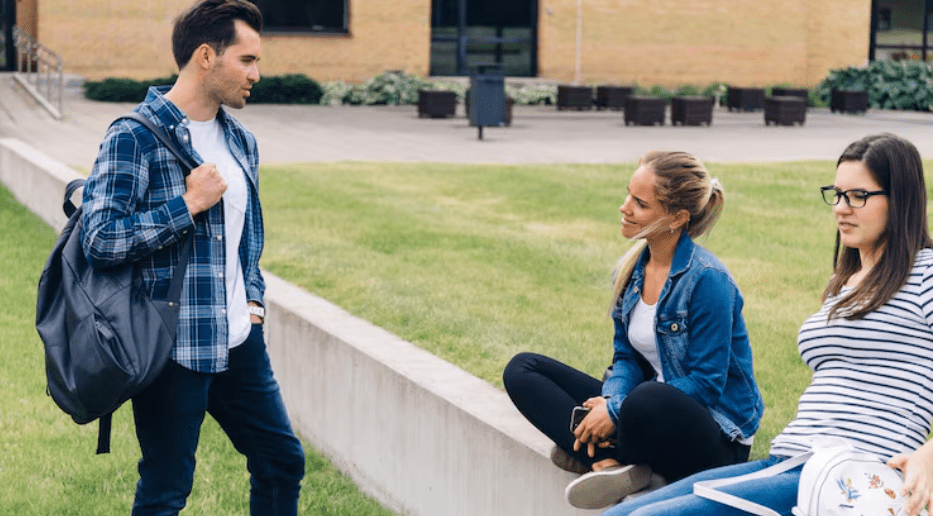
As we go through this, it seems like we’ve quietly created two separate mental health systems and chosen not to compare them. One has grief counselors and gardens. The other has a flyer with a 1-800 number and a Tuesday window that ends at 3 p.m. posted on a bulletin board. Students also differ from one another. The majority of community college students are older, employed, and frequently have children of their own. The high-achievement anxiety of a sophomore at Brown is nothing like the stress, loneliness, and exhaustion that a single mother juggling two classes in between hospital shifts is dealing with. Nevertheless, she is somehow expected to find her way to wellness on her own time, with her own money, and using resources that haven’t been designed for her. It is difficult to ignore the fact that she is hardly ever mentioned in the literature that describes the “college mental health crisis.”
In a piece about the peculiar isolation of elite education, William Deresiewicz recounted returning home and discovering he was unable to strike up a conversation with his plumber. This problem also stems from the class blindness he was referring to. The conversation about wellbeing in American higher education is, in theory, applicable to everyone, but it is almost entirely shaped by institutions that serve the top tenth of students. The end product is a vocabulary, a collection of programs, and a body of research that may not adequately serve those who most need assistance.
A portion of this is evolving. Administrators at community colleges are experimenting with low-cost group therapy, telehealth partnerships, and peer-support models. There is the work. It simply doesn’t receive foundation grants or conference panels. It’s still unclear if any of it scales. Prestige attracts funding, and schools with wellness deans already enjoy prestige.
It’s tempting to label this as a policy failure as you watch it unfold, but it seems more like a failure of attention. The nation has made the decision to be concerned about its college students. It simply hasn’t made the decision to be equally concerned about each of them.
