
If the roads are clear and the weather holds, the closest stroke specialist in a rural Tennessee county is two hours away by car. The small emergency team at the nearby hospital takes care of what it can, and the nurses know their patients by name. However, time is of the essence and there is very little room for delay when someone shows signs of a large vessel occlusion. These kinds of circumstances—quiet, everyday, and truly life-or-death—are the focus of a new partnership between Viz.ai and the National Rural Health Association.
The collaboration, which was announced at the end of April, combines the NRHA’s Rural Hospital & Clinic Partnership Program with Viz.ai, an AI platform that is currently in use in about 2,000 American hospitals. On paper, the objective is simple: assist rural hospital administrators in comprehending AI tools sufficiently to use them. However, anyone who has worked in rural healthcare is aware of how much more difficult the task beneath that objective is.
Research reveals a startling disparity: compared to their urban counterparts, rural hospitals are roughly 25% less likely to adopt new technologies like artificial intelligence. The causes are not enigmatic. There is less money available. There are fewer clinical teams. Often, there isn’t the administrative capacity needed to assess, launch, and maintain a new platform. Strokes, pulmonary embolisms, and aortic emergencies are among the conditions these hospitals deal with, and they don’t slow down to make room for scarce resources. In a county with only one ambulance, a delayed transfer decision affects many patients.
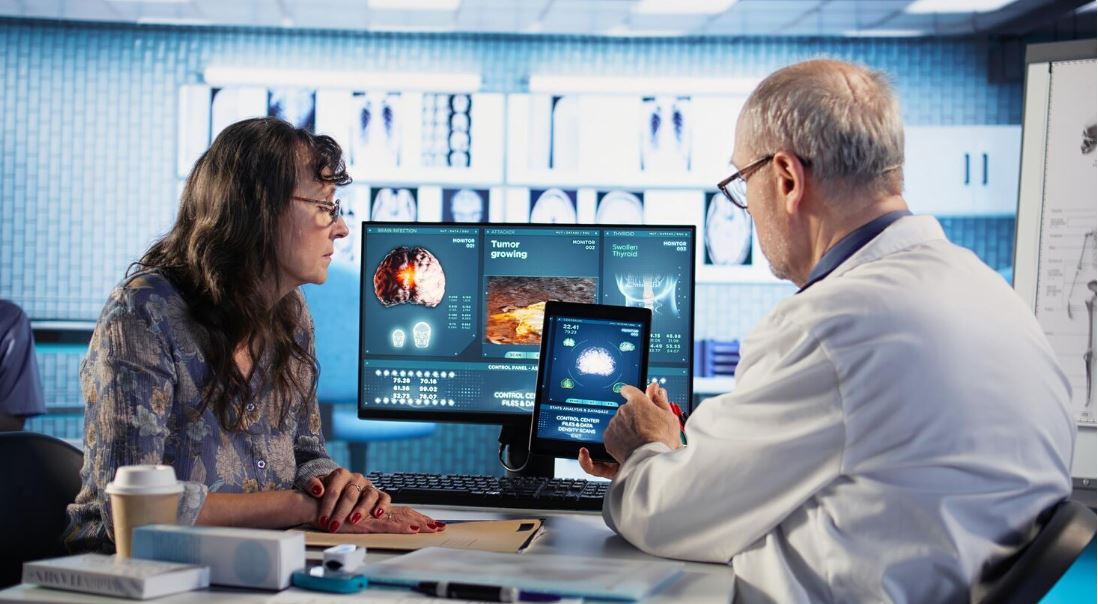
Functionally, Viz.ai analyzes clinical data and medical imaging in real time to identify serious conditions early. It then automatically notifies the appropriate clinicians and links local teams with distant specialists. The doctor making the call is not replaced by it. It simply ensures that the doctor has faster access to better information. To put it simply, many rural hospitals are still figuring out which technologies will truly make a difference, according to Andrew Ibrahim, Chief Clinical Officer at Viz.ai and a researcher who has spent years studying rural hospital performance. In every way, that uncertainty is costly.

It’s important to note that not all rural hospitals are having difficulties, even though this isn’t always mentioned in these announcements. Critical access hospitals frequently perform common surgical procedures as safely as their urban counterparts, sometimes at a lower cost, according to studies involving millions of Medicare patients. Time-sensitive situations that call for quick coordination over long distances, where a few minutes of delay can permanently change outcomes, are where the gaps typically show up. That’s exactly what Viz.ai was designed for.
The partnership will advance through sessions at the NRHA’s national conference in May, educational webinars, and peer hospital case studies. Additionally, Viz.ai and NRHA will collaborate with subject-matter experts to ensure that the instructional materials represent rural-specific realities rather than merely condensed versions of urban best practices. It may not seem important, but that distinction is crucial. When implemented in a 25-bed hospital in a farming community, a tool built around urban workflows with assumptions about urban staffing tends to increase rather than decrease friction.
As this collaboration develops, there’s a sense that it represents something a little different from the typical announcement of a health-tech expansion. Roughly one in four hospitals that currently use the Viz.ai platform are located in rural areas. It is not a hypothetical foundation. It is genuinely unclear whether the educational component will result in significant adoption throughout the larger rural landscape, especially in the settings with the fewest resources. However, the problem being addressed is real, and the direction seems correct. A quicker response is very valuable to a nurse in a small hospital who is waiting for a specialist to call back after receiving a patient’s imaging results at two in the morning.