
It feels more and more like a punishment to stand in Phoenix in July. The sidewalk glistens. Every building’s air conditioning units moan under a load that they were never intended to support indefinitely. Heads down, people move quickly between doorways and shade. And there’s probably a document somewhere in City Hall—a sustainability framework, a resilience strategy, or a climate plan—that someone diligently worked on, meticulously filed, and hasn’t been significantly updated since a previous political season.
This is the current state of urban climate planning in the United States. In the last ten years, hundreds of cities have declared climate emergencies. Press conferences, sincere language about urgency, and, frequently, very little else follow the declarations. The European Environment Agency was remarkably open about what it discovered in its own backyard when it released its first-ever comprehensive climate risk assessment: while progress is being made, it is obviously insufficient, and the means to even determine whether it is effective are still being developed. If that’s the case in Europe, where climate policy has binding targets and legal teeth, it’s important to consider the situation in American cities, where it mostly doesn’t.
The truth is that it’s inconsistent and often frightening. Big cities like New York, Los Angeles, and Chicago have specialized offices, thorough plans, and some real investment. However, a sizable portion of American cities with 50,000–200,000 residents are functioning without any kind of comprehensive, up-to-date climate resilience plan. The emergency has been declared. They’re not ready for it. At this point, it is difficult to ignore the disparity between the infrastructure of response and the rhetoric.
This is challenging in part because “climate risk” is not a single, neat issue. It doesn’t act like a failing water main or a budget deficit. For years, scientists have promoted a theory known as “compound risk”—the notion that climate events don’t happen on their own. There was more to the recent wildfires that ravaged Portugal and Spain than just drought. They resulted from years of poor forest management, a heatwave that collided with stressed vegetation, and communities that had become economically reliant on environments they didn’t fully comprehend. The final link in a lengthy chain was the fire. By definition, a resilience plan that solely addresses the fire itself is insufficient.
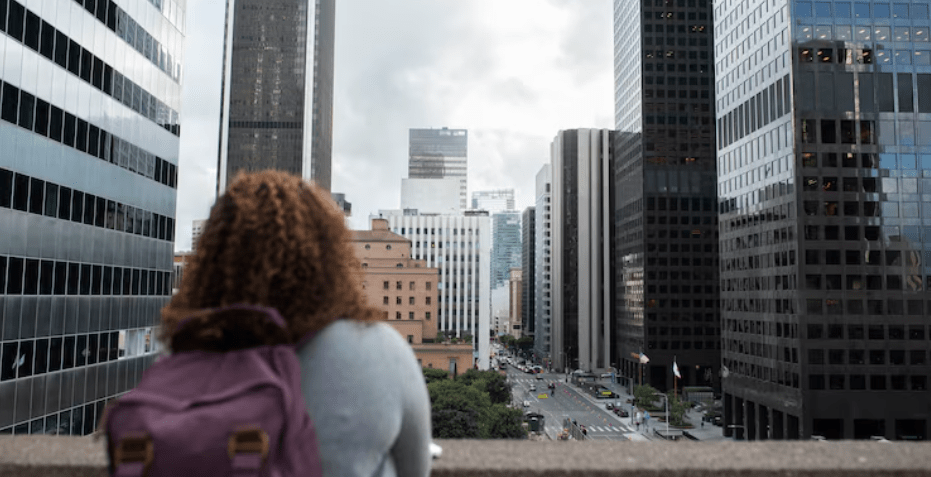
American cities deal with this in different ways. With an aging stormwater infrastructure and a housing stock built just inches above flood elevation, a Gulf Coast municipality that depends heavily on tourism is situated in precisely the kind of compound vulnerability that researchers frequently warn about. On paper, the individual risks are controllable. They cascade together. Additionally, the lack of an integrated plan becomes a human tragedy as soon as a Category 3 storm hits, not if or when.
Watching this unfold slowly is especially annoying because ignorance isn’t the only issue. The majority of city officials are aware that climate change is occurring more quickly than anticipated. Institutional issues are the problem. Since the start of the modern climate movement, mitigation—reducing emissions—and adaptation—preparing for impact—have been treated as distinct policy lanes, funded separately, planned separately, and occasionally housed in completely different departments. A city may have an aggressive EV fleet program under its sustainability office while its emergency management department is using flood maps that are fifteen years outdated, leading to a sort of organizational incoherence.
Additionally, there is a political calculation that is difficult to state clearly but worth mentioning: in some contexts, it is easier to sell adapting to the effects of climate change than addressing its underlying causes. It is a project to install better drainage. It’s difficult to rezone a flood plain. Cities carry out the drainage project, which they refer to as resilience, and it is resilience—partial, transient, and unfinished. Maladaptation is the term used by the European research community to describe this. The action that subtly increases the underlying exposure while making you feel safer.
Recent infrastructure and climate legislation from the federal government may encourage more cities to create comprehensive plans because funding frequently necessitates them. However, political tides and funding cycles change. Physics is the one thing that never changes. The storms are becoming more rainy. The duration of the heat is increasing. In actual locations where actual people reside, the compound risks that researchers have been mapping out in scholarly articles are manifesting on time. A plan for climate resilience is essential for every American city. Not a proclamation. It was not a press release. A real strategy. The number of people who actually have one is much lower than what is needed in an emergency.
